
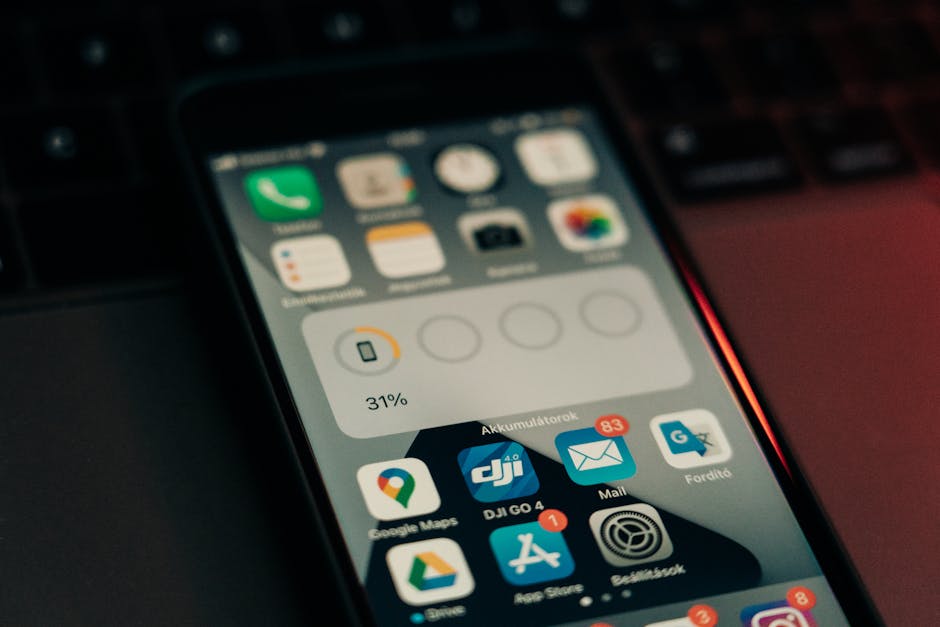
A recent report from 9to5Mac suggests that Apple’s upcoming iOS 17 operating system will prioritize significant improvements to battery life. This initiative reportedly focuses on extensive code cleanup and subtle interface tweaks, aiming to enhance power efficiency across a wide range of iPhone models. The move is anticipated to address long-standing user concerns regarding battery longevity, particularly as devices age and new features are introduced.
Background: The Evolution of iOS and Battery Demands
Battery life has consistently been a critical factor in user satisfaction and a significant engineering challenge for smartphone manufacturers, including Apple. Over the years, as iOS has evolved from its foundational release in 2007, the operating system has grown exponentially in complexity and feature set, placing ever-increasing demands on device power reserves.
Early versions of iOS, running on devices like the original iPhone and iPhone 3G, were relatively lean. The feature set was focused, and background processes were minimal. As Apple introduced more sophisticated hardware, the software followed suit. The Retina display, introduced with the iPhone 4, demanded more power for its higher pixel density. Subsequent innovations like multi-tasking, introduced in iOS 4, and the notification center in iOS 5, began to add layers of background activity that, while enhancing user experience, inherently consumed more energy.
The introduction of powerful A-series chips, starting with the A4 in the iPad and iPhone 4, brought desktop-class performance to mobile. While these chips were designed with efficiency in mind, their increased capabilities allowed for more graphically intensive applications, advanced computational photography, and complex animations across the user interface. Features like Siri, Live Photos, and later, augmented reality (AR) capabilities, leveraged these powerful processors, often requiring sustained periods of high CPU and GPU usage.
Significant battery challenges often arose with major iOS updates that introduced substantial new functionalities. iOS 7, with its complete visual overhaul and parallax effects, initially faced criticism for its battery drain on older devices. Similarly, subsequent updates bringing features like widgets (iOS 8), 3D Touch (iOS 9), and later, Live Activities (iOS 16) and Always-On Displays (iPhone 14 Pro series), added new dimensions of power consumption. Each new capability, from sophisticated background app refresh mechanisms to more granular location services and advanced sensor integration, contributes to the overall power footprint of the operating system.
Apple has, over time, implemented various strategies to mitigate battery drain. Low Power Mode, introduced in iOS 9, provides users with a temporary solution by reducing background activity, visual effects, and fetch frequencies. Optimized Battery Charging, launched with iOS 13, intelligently learns a user’s charging habits to reduce battery aging. The “Battery Health” feature, also in iOS 13, offers transparency into a device’s battery capacity. However, these features often serve as reactive measures rather than proactive optimizations within the core operating system.
The “performance management” controversy surrounding iOS 10.2.1 and later updates, where Apple intentionally throttled older iPhones with degraded batteries to prevent unexpected shutdowns, highlighted the delicate balance between performance and battery stability. While Apple stated this was to prolong the life of devices, it underscored the underlying challenge of maintaining optimal performance on aging hardware with increasingly demanding software.
Historically, Apple has followed a development pattern often described as a “tick-tock” cycle, similar to that seen in processor development. One year might focus heavily on introducing groundbreaking new features and a significant interface redesign (the “tick”), while the subsequent year might prioritize refinement, performance enhancements, and stability (the “tock”). iOS 16 was a feature-rich “tick” year, bringing extensive Lock Screen customization, Live Activities, iCloud Shared Photo Library, and significant updates to Messages. These features, while welcomed, often come with an initial performance and battery cost as the system adapts and developers optimize. The report suggests that iOS 17 might represent a “tock” year, akin to the “Snow Leopard” release for macOS, which famously focused on “no new features, just better ones,” prioritizing stability, performance, and crucially, battery life. This strategic shift would allow Apple to consolidate its software architecture, address technical debt, and lay a more efficient foundation for future innovations.
The current mobile landscape sees consumers increasingly expecting all-day battery life, even with heavy usage. As devices become more integral to daily life, from communication and entertainment to work and health monitoring, the ability to last from morning to night without a charge is a primary concern. This expectation, coupled with the ever-present drive for thinner devices with limited battery capacities, places immense pressure on software optimization. The reported focus on code cleanup and interface tweaks for iOS 17 reflects Apple’s acknowledgment of these persistent user demands and its commitment to ensuring a robust, efficient experience across its vast ecosystem of devices.
Key Developments: Code Cleanup and Interface Tweaks for Efficiency
The core of the reported iOS 17 strategy revolves around two major pillars: extensive code cleanup and subtle interface tweaks, both aimed at significantly boosting battery efficiency. These initiatives represent a deep dive into the operating system’s architecture, addressing inefficiencies that have accumulated over years of feature development and platform evolution.
Extensive Code Cleanup
Code cleanup, often referred to as refactoring, is a critical process in software development where internal code structure is improved without changing its external behavior. For an operating system as mature and complex as iOS, this involves a monumental effort across numerous layers of the software stack.
One primary aspect of code cleanup is the refactoring of old or legacy code. Over more than 15 years, iOS has seen countless features added, modified, and sometimes deprecated. This process can leave behind code that is no longer optimal, relies on outdated programming paradigms, or creates unnecessary overhead. For instance, Apple has been gradually transitioning its frameworks from Objective-C to Swift, its modern programming language. This cleanup could involve accelerating this transition, rewriting older Objective-C components in Swift to leverage its performance benefits, memory safety features, and modern concurrency models. Replacing older, less efficient algorithms with optimized, contemporary alternatives is another key area. This might apply to anything from sorting algorithms within system libraries to data compression routines or cryptographic functions.
Removal of deprecated APIs and unused code paths is another crucial element. As new APIs are introduced and older ones are phased out, applications and system components might still contain remnants of code that call deprecated functions or handle scenarios that no longer exist. Identifying and removing this “dead code” can reduce the overall footprint of the operating system, decrease memory usage, and simplify execution paths, leading to faster and more efficient processing. This also benefits third-party developers, providing a cleaner, more consistent platform to build upon.
Optimizing background processes and memory management is vital for battery life. iOS manages numerous background tasks, from app refreshes and push notifications to location services and system daemons. Code cleanup in this area would involve streamlining these processes, ensuring they only run when necessary, for the minimum duration required, and with the lowest possible power consumption. This could include more aggressive memory reclamation, reducing memory leaks, and optimizing how the system swaps data to and from storage. Efficient memory management directly translates to less CPU activity and lower power draw.
Enhancements to core system frameworks are also expected. These frameworks underpin almost every aspect of iOS, from graphics rendering (Core Graphics, Metal) and networking (CFNetwork, Network.framework) to user interface components (UIKit, SwiftUI). Optimizations at this fundamental level can have a cascading positive effect across the entire system and all applications. For example, improving the efficiency of the Metal graphics framework could lead to smoother animations and faster app launches with less GPU power. Streamlining the network stack could reduce the energy consumed by Wi-Fi and cellular radios during data transfers.
The benefits of such extensive code cleanup are multifaceted. It leads to a more stable, responsive, and secure operating system. For users, it means faster app launches, smoother transitions between applications, and a general feeling of snappiness. Crucially for this report, it means that the system requires fewer CPU cycles and less memory to perform the same tasks, directly translating to reduced power consumption and extended battery life.
Subtle Interface Tweaks
Beyond the underlying code, iOS 17 is also expected to incorporate subtle interface tweaks specifically designed to enhance power efficiency without radically altering the user experience. These are not about a major visual redesign but rather about optimizing how existing UI elements behave and consume resources.
One significant area for optimization is animation and visual effects. While iOS is renowned for its fluid animations and rich visual feedback, complex animations can be resource-intensive, drawing on both the CPU and GPU. The tweaks in iOS 17 might involve refining these animations to be less computationally demanding. This could mean using more efficient rendering techniques, simplifying certain animation curves, or even subtly reducing the duration or intensity of some transitions. For instance, the parallax effect on the Lock Screen or the way apps launch and close might be re-evaluated for power efficiency. The goal is to maintain the premium feel of iOS while reducing the energy cost of these visual flourishes.
Display management is another critical area. Modern iPhones feature advanced displays, including OLED panels and ProMotion technology (adaptive refresh rates up to 120Hz). While ProMotion dynamically adjusts the refresh rate to save power, further optimizations could be implemented. This might involve more intelligent algorithms for determining when to drop the refresh rate to its lowest possible setting (e.g., 10Hz or even 1Hz for Always-On Display). For the Always-On Display on iPhone 14 Pro models, tweaks could focus on how frequently elements update, how brightly they are rendered, and how efficiently the system manages the display controller to minimize power draw when the screen is “off.” Dark Mode, already a power-saver on OLED screens, could also see further refinements in how it renders various UI components to maximize black pixels and minimize power consumption.
Widget optimization is another area ripe for refinement. Widgets, especially those introduced with iOS 14 and enhanced in iOS 16, provide glanceable information but can consume power if not managed efficiently. Tweaks could involve optimizing how frequently widgets refresh their content, how they communicate with their underlying apps, and how they render their UI, ensuring they only consume resources when necessary.
Other potential interface tweaks could include optimizations to notification handling. Smarter grouping, more efficient delivery mechanisms, and refined visual presentation of notifications could reduce the cumulative power drain from frequent alerts. Even elements like the keyboard and haptic feedback could see minor adjustments to their power profiles. For example, ensuring that haptic feedback motors are activated and deactivated with maximum efficiency.
These interface tweaks, while subtle, can collectively make a significant difference. By reducing the computational load of visual elements and improving how the display and other output components are managed, iOS 17 aims to deliver a smoother, more visually appealing experience that also happens to be significantly more power-efficient. Together, the extensive code cleanup and these thoughtful interface refinements are expected to lay a more robust and energy-conscious foundation for the future of iOS.
Impact: Who Benefits from Enhanced Battery Life
The reported focus on battery life improvements in iOS 17, through comprehensive code cleanup and interface tweaks, stands to have a wide-ranging positive impact across various stakeholders within the Apple ecosystem. From individual users to developers and Apple itself, the benefits of a more power-efficient operating system are substantial and far-reaching.
For End-Users: A More Reliable and Sustainable Experience
The most direct and immediate beneficiaries are the millions of iPhone users worldwide. Enhanced battery life translates into a more reliable and less anxiety-inducing mobile experience.
Extended Daily Usage: The primary benefit is simply more hours of use on a single charge. This is crucial for heavy users who rely on their iPhones for work, communication, navigation, entertainment, and health tracking throughout the day. Commuters, students, professionals, and travelers will find their devices more capable of lasting from morning to night without needing a midday top-up or relying on portable power banks.
* Reduced Charging Frequency: Less frequent charging reduces the daily inconvenience of seeking out power outlets. It also contributes to less wear and tear on charging ports and cables, potentially prolonging the life of accessories.
* Improved Device Longevity: While battery health naturally degrades over time, a more efficient operating system can slow this degradation. If the software demands less from the battery on a daily basis, the battery undergoes fewer charge cycles and experiences less stress, potentially extending its useful lifespan. This is particularly beneficial for users who hold onto their devices for several years. For owners of older iPhone models (e.g., iPhone X, XS, 11, 12 series), an optimized iOS 17 could breathe new life into their devices, making them feel snappier and more capable of lasting through the day, delaying the perceived need for an upgrade.
* Smoother User Experience: Code cleanup and optimization inherently lead to a more responsive and stable operating system. Apps might launch faster, transitions between tasks could be smoother, and overall system performance could feel more fluid. This reduces frustration and enhances the premium feel of the iPhone.
* Environmental Impact: From a broader perspective, improved device longevity aligns with Apple’s environmental goals. If users can comfortably use their iPhones for longer periods, the demand for frequent upgrades might slightly decrease, contributing to less electronic waste and a more sustainable consumption model. This also aligns with the growing consumer awareness regarding sustainability and product lifecycle.
For Developers: A More Stable and Predictable Platform
Third-party app developers also stand to gain significantly from a more optimized iOS.
Stable and Predictable Performance: A cleaner, more efficient core operating system provides a more stable foundation for applications. This can lead to fewer unexpected performance issues, crashes, or battery drain complaints that developers might mistakenly attribute to their own app’s code.
* Easier Optimization: With Apple having done the heavy lifting of system-level optimization, developers might find it easier to optimize their own applications for performance and battery life. They can rely on a more efficient underlying framework, allowing them to focus on features and user experience rather than battling system inefficiencies.
* Reduced Technical Debt: If Apple removes deprecated APIs and streamlines its frameworks, it encourages developers to adopt modern best practices and APIs, leading to more robust and future-proof applications.
* Improved App Store Metrics: Apps running on a more efficient iOS might naturally perform better, leading to higher user satisfaction, better reviews, and potentially improved App Store rankings.
For Apple: Reputation, Market Position, and Sustainability
Apple itself stands to benefit strategically from a battery-focused iOS 17.
Enhanced Reputation and User Trust: Addressing a common and persistent user complaint like battery life can significantly boost Apple’s reputation for quality and user-centric design. It reinforces trust in the brand and demonstrates a commitment to refining the user experience beyond just adding new features.
* Competitive Advantage: In a highly competitive smartphone market, superior battery life can be a key differentiator. If iPhones running iOS 17 consistently outperform competitors in real-world battery tests, it provides a strong selling point for new devices and encourages users to remain within the Apple ecosystem.
* Encouraging Upgrades (Indirectly): While the focus is on longevity, a more optimized iOS 17 could make older devices feel renewed. However, the performance gains on newer hardware, combined with the perception of a consistently excellent user experience, can still subtly encourage upgrades by reinforcing the value of the iPhone lineup.
* Alignment with Sustainability Goals: As mentioned, promoting device longevity through software optimization directly supports Apple’s ambitious environmental initiatives, including its goal to become carbon neutral across its entire business, manufacturing supply chain, and product life cycle by 2030.
* Reduced Support Costs: A more stable and efficient operating system could potentially lead to fewer customer support inquiries related to battery drain or performance issues, reducing operational costs.
In essence, the reported changes in iOS 17 are not just about a technical upgrade; they represent a strategic decision to prioritize fundamental user experience and operational efficiency. The ripple effects of a more power-efficient iOS will be felt across the entire ecosystem, creating a more satisfying experience for users, a more stable platform for developers, and reinforcing Apple’s position as a leader in mobile technology.
What Next: Expected Milestones and Long-Term Implications
The reported direction for iOS 17 sets the stage for a series of anticipated milestones and could have significant long-term implications for Apple’s software development strategy and the broader mobile industry. The journey from initial reports to widespread user adoption involves several key phases, each with its own set of expectations and potential impacts.
WWDC 2023: The Official Unveiling (June)
The most immediate and critical milestone is Apple’s annual Worldwide Developers Conference (WWDC), typically held in early June in California. It is here that Apple officially unveils its next-generation operating systems, including iOS 17.
Keynote Announcements: During the opening keynote, Apple executives are expected to detail the marquee features of iOS 17. While the report suggests a focus on refinement rather than groundbreaking new features, specific mentions of performance improvements, battery life enhancements, and the underlying architectural changes are highly anticipated. Apple might highlight specific benchmarks or user experience metrics to demonstrate the impact of the code cleanup and interface tweaks.
* Developer Sessions: Following the keynote, WWDC includes numerous developer sessions. These technical deep dives will provide crucial information for developers on the changes within iOS 17. Specific sessions on system performance, energy optimization, new APIs, and deprecated frameworks will be closely watched. Developers will learn how to adapt their apps to the new, more efficient environment and leverage any new tools Apple provides for battery optimization.
* Initial Developer Betas: Immediately after the WWDC keynote, Apple typically releases the first developer beta of iOS 17. This allows registered developers to begin testing their applications on the new operating system, identify compatibility issues, and start optimizing for the new performance characteristics. This phase is crucial for gathering initial feedback and bug reports from a technically proficient audience.
Beta Testing Phases: Refinement and Feedback (June – September)
Following WWDC, iOS 17 will undergo an intensive beta testing period, typically lasting from June until its public release in September.
Developer Betas (Ongoing): Throughout the summer, Apple will release multiple iterations of developer betas, incorporating bug fixes, performance improvements, and addressing feedback. This iterative process is essential for stabilizing the operating system.
* Public Betas (July – September): Usually starting a few weeks after the initial developer beta, Apple also releases a public beta program. This allows a wider audience of non-developers to test the software, providing a massive influx of real-world usage data and bug reports. For a battery-focused update like iOS 17, the public beta phase will be critical for gathering extensive data on battery performance across a diverse range of devices and usage patterns. Users will be keen to report their experiences with battery longevity, and Apple will use this feedback to fine-tune the optimizations.
* Third-Party App Optimization: During this period, developers will be actively updating their applications to ensure full compatibility and optimal performance with iOS 17. This includes adopting new APIs, removing reliance on deprecated code, and leveraging any new system-level efficiencies.
Official Release: Widespread Availability (September)
The culmination of the development and testing cycle is the official public release of iOS 17, typically in September, coinciding with the launch of new iPhone models.
New iPhone Launch: The new iPhone models will ship with iOS 17 pre-installed, showcasing the operating system’s capabilities on the latest hardware.
* Software Update for Existing Devices: Millions of existing iPhone users will receive the over-the-air update, bringing the battery life improvements and other features to a vast installed base. This is the moment when the impact of Apple’s efforts will be felt by the general public.
* Analyst and Media Reactions: Tech journalists and analysts will conduct extensive reviews, focusing heavily on battery performance comparisons between iOS 16 and iOS 17, particularly on older devices. Real-world tests and benchmarks will confirm (or challenge) the reported improvements.
Subsequent Updates: Continuous Refinement (Post-September)
The release of iOS 17 is not the end of the development cycle. Apple will continue to refine the operating system with minor point releases (e.g., iOS 17.0.1, 17.1, 17.2, etc.) throughout the year.
Bug Fixes and Further Optimizations: These updates will address any remaining bugs, security vulnerabilities, and potentially introduce further performance and battery life optimizations based on ongoing telemetry and user feedback.
* New Features (Minor): While the initial release might focus on refinement, subsequent updates could introduce minor new features that were not ready for the initial launch or were held back to maintain the “refinement” focus of the primary release.
Long-Term Implications: A Shift in Development Philosophy?
The rumored direction for iOS 17 could signify a broader, long-term shift in Apple’s software development philosophy.
“Quality of Life” Years: If iOS 17 is indeed a “Snow Leopard” moment for iOS, it could establish a precedent for future “quality of life” years, where Apple periodically dedicates a major OS release to internal cleanup, performance, and stability rather than solely pursuing new features. This would be welcomed by users who value reliability and longevity.
* Sustainability and Device Longevity: A sustained focus on battery life and performance for older devices aligns perfectly with Apple’s increasing emphasis on environmental sustainability. By making devices usable and enjoyable for longer, Apple can reduce the perceived need for frequent upgrades, contributing to less e-waste.
* Foundation for Future Innovation: A cleaner, more efficient codebase provides a stronger, more stable foundation for future innovations. It allows Apple to build new, complex features without constantly battling technical debt or performance bottlenecks, ultimately enabling even more ambitious capabilities in subsequent iOS versions.
* Competitive Pressure: If Apple successfully delivers on significant battery life improvements, it will likely put pressure on competitors in the smartphone market to also prioritize deep system-level optimizations, potentially benefiting the entire industry and consumers globally.
The journey of iOS 17, from its initial report to its full rollout, represents a critical juncture for Apple. By reportedly prioritizing fundamental improvements like battery life through meticulous code cleanup and thoughtful interface tweaks, Apple aims to deliver a more robust, efficient, and ultimately more satisfying experience for its vast user base, setting a new standard for mobile operating system excellence.
As an Amazon Associate I earn from qualifying purchases.